Abstract awaited.
Abstract awaited.
The field of artificial intelligence (AI) has taken a tight hold on broad aspects of society, industry, business, and governance in ways that dictate the prosperity and might of the world’s economies. The AI market size is projected to grow from $189 billion in 2023 to $4.8 trillion by 2033. Currently, AI is dominated by large language models (LLMs) that exhibit linguistic and visual intelligence. However, training these models requires a massive amount of data scraped from the web as well as large amounts of energy (50-60 GWh to train GPT-4). Despite these costs, these models often hallucinate, a characteristic that prevents them from being deployed in critical application domains. In contrast, the human brain consumes only 20W of power. What is needed is the next level of AI evolution in which lightweight domain-specific multimodal models with higher levels of intelligence can reason, plan, and make decisions in dynamic environments with real-time data and prior knowledge, while learning continuously and evolving in ways that enhance future decision-making capability. This will define the next wave of AI, progressing from today’s large models, trained with vast amounts of data, to nimble energy-efficient domain-specific agents that can reason and think in a world full of uncertainty. To support such agents, hardware will need to be reimagined to allow energy efficiencies ≥ 1000X over the state of the art. Such a vision of future AI systems is presented in this talk. The talk is based on collaborative work with colleagues as presented in arXiv 2510.22052.
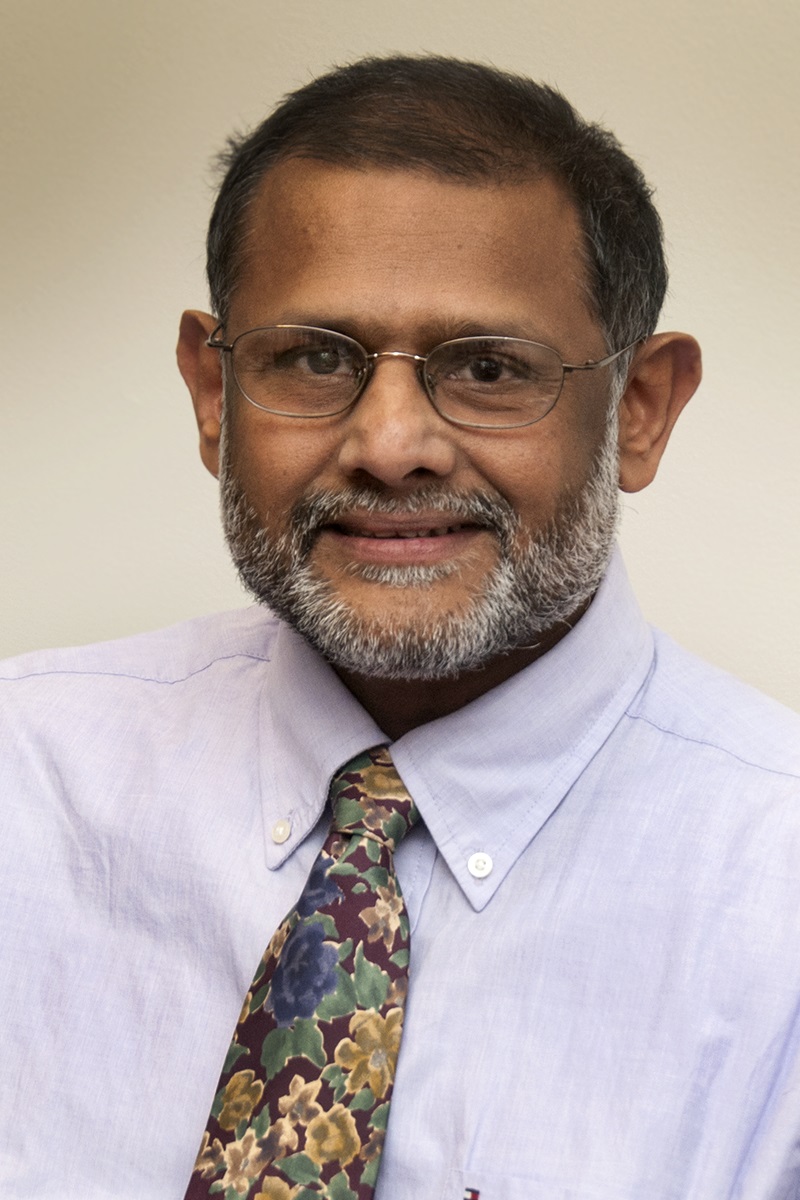
Keshab K. Parhi received the B.Tech. degree from the Indian Institute of Technology (IIT), Kharagpur, in 1982, the M.S.E.E. degree from the University of Pennsylvania, Philadelphia, in 1984, and the Ph.D. degree from the University of California, Berkeley, in 1988. He has been with the University of Minnesota, Minneapolis, since 1988, where he is currently the Erwin A. Kelen Chair and a Distinguished McKnight University Professor in the Department of Electrical and Computer Engineering.
He has published over 750 papers, is the inventor of 36 patents, and has authored the textbook VLSI Digital Signal Processing Systems: Design and Implementation (Wiley, 1999). His current research addresses VLSI architecture design of artificial intelligence and machine learning systems, signal processing systems, hardware security, quantum information science, and data-driven neuroengineering and neuroscience with applications to neuro-psychiatric disorders.
Dr. Parhi is the recipient of numerous awards including the 2003 EEE Kiyo Tomiyasu Technical Field Award; and the 2017 Mac Van Valkenburg award, and the 2012 Charles A. Desoer Technical Achievement award, from the IEEE Circuits and Systems Society. He served as the Editor-in-Chief of the IEEE Trans. Circuits and Systems, Part-I during 2004 and 2005, and currently serves as the Editor-in-Chief of the IEEE Circuits and Systems Magazine. He is a Life Fellow of IEEE, a Fellow of the American Association for the Advancement of Science (AAAS), the Association for Computing Machinery (ACM), the American Institute of Medical and Biological Engineering (AIMBE), and the National Academy of Inventors (NAI).
Abstract awaited.
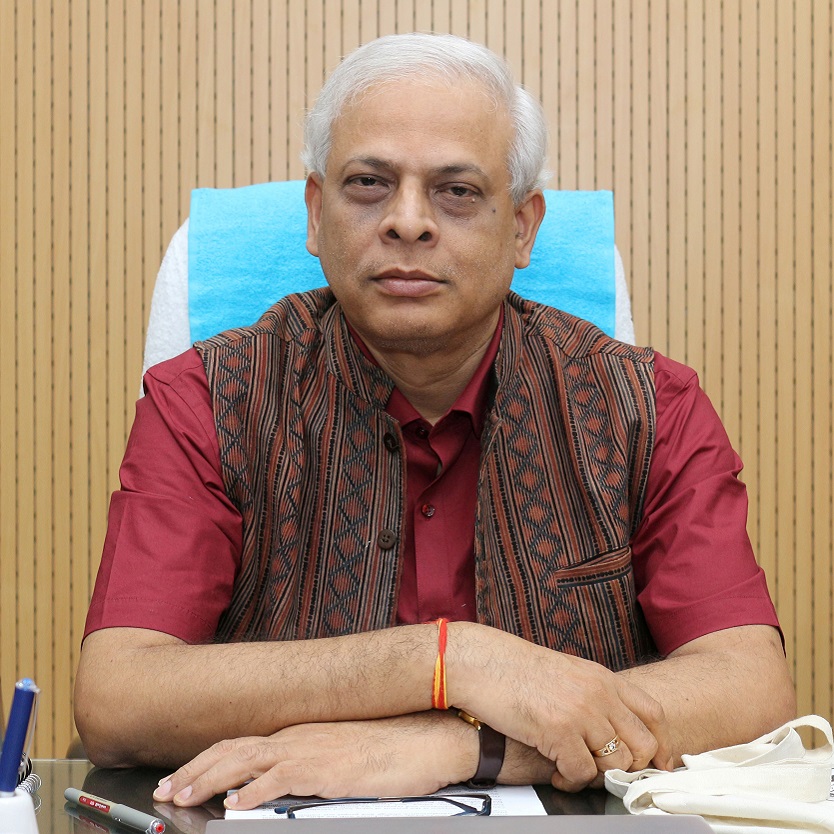
Prof. Amit Patra, received the B.Tech., M.Tech. and Ph.D. degrees from the Indian Institute of Technology, Kharagpur in 1984, 1986 and 1990 respectively. During 1992-93 and in 2000 he visited the Ruhr-University, Bochum, Germany as a Post-doctoral Fellow of the Alexander von Humboldt Foundation. He joined the Department of Electrical Engineering, Indian Institute of Technology, Kharagpur in 1987 as a faculty member, and became a Professor in the Higher Academic Grade Pay in 2009. During 2018-19 he visited the University of Maryland, Baltimore County as a Senior Visiting Research Scientist and between 2019-22, he was recognized as an Honorary Adjunct Professor.
He was the Professor In-Charge, Advanced VLSI Design Lab, at IIT Kharagpur during 2004-07. Between 2007 and 2013 he served as the Dean (Alumni Affairs and International Relations) at IIT Kharagpur. Between 2013-15 he served in a voluntary role of the Executive Advisor, Institutional Development at IIT Kharagpur. From April, 2020 to December 2021, he was the Professor In- Charge, Rajarhat Research Park and from July, 2021 to May, 2024 he served as the Deputy Director of IIT Kharagpur. Currently, he is serving as the Director of IIT (BHU), Varanasi.